
“Strive for progress, not perfection”
Yoga Styles
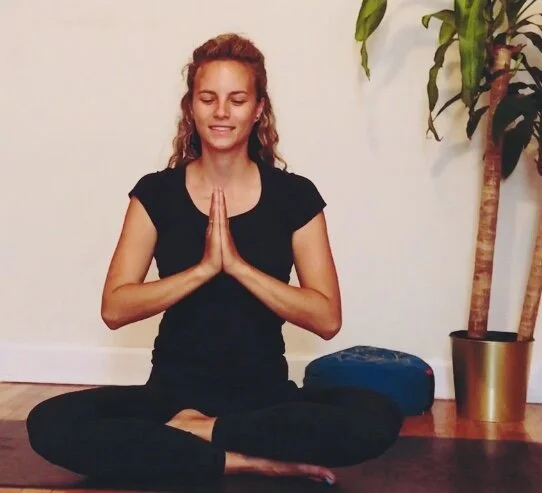
Yin Yoga
While “yang” yoga focuses on your muscles, yin yoga targets your deep connective tissues, like your fascia, ligaments, joints, and bones. It’s slow and meditative, giving you space to turn inward and tune into both your mind and the physical sensations of your body. Because you’re holding poses for a longer period of time than you would in other traditional types of yoga, yin yoga helps you stretch and lengthen those rarely-used tissues while also teaching you how to breathe through discomfort and sit with your thoughts.The practice of yin yoga is based on ancient Chinese philosophies and Taoist principles which believe there are pathways of Qi (energy) that run through our bodies. By stretching and deepening into poses, we’re opening up any blockages and releasing that energy to flow freely.In Yin Yoga you will learn how to hold poses from 3 -5 minutes to up to even 20 minutes at a time.
Benefits :
Lengthens connective tissue
Think of your fascia like shrink wrap around your muscles and bones. When this connective tissue is underused, it becomes less elastic which can lead to aches and stiffness. “If you gently stretch connective tissue by holding a yin pose for a long time, the body will respond by making them a little longer and stronger.
Increases flexibility
Elastic fascia and mobile joints lead to better flexibility, which is one of the key benefits to a regular yin yoga practice. Because fascia needs at least 2 minutes of sustained stretching to actually affect its elasticity, yin is one of the most effective ways at improving your flexibility and releasing tension in tight spots.
Reduces stress levels
That calm you feel after a yin class is real! Yin yoga to has a significant impact on reducing stress and anxieties and lowering the risk of depression. It also activates your parasympathetic nervous system, which calms your body and slows your heart rate (rather than the autonomic nervous system, which triggers your fight-or-flight response)
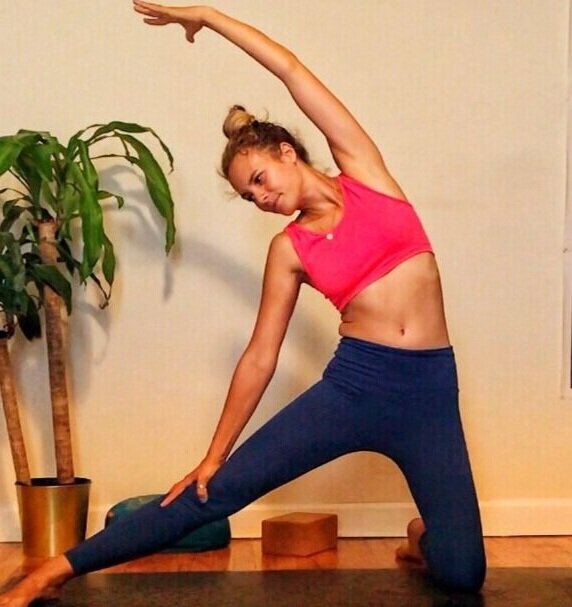
Flow (Chakra)
A Flow or vinyasa class is a smooth transition between asanas (postures) in styles of modern yoga as exercise such as Ashtanga Yoga and Hatha Yoga, especially when movement is paired with the breath. You learn how to coordinate movement with your breath to flow from one pose to the next.
Slow Flow Vinyasa Yoga is great as a Beginner Yoga class. However, even experienced students can benefit from learning how to slow down their practice and really get into the breath work and healing aspects of yoga.
Asanas are basically the poses and postures held in a “Vinyasa class” In Hatha and modern Yoga you could call them simply “exercises”. These include for example reclining, standing, inverted, twisting, and balancing poses.
The poses can also be relaxing and meditative.
Benefits:
Stress reduction
Participation in a single 90-minute session of Hatha yoga was associated with stress reductio and it can reduce perceived stress even more significantly.
Reduced depression symptoms
A regular Hatha yoga practice can significantly decrease levels of anxiety and depression
Muscle and joint flexibility
Participating in Hatha yoga improves flexibility in the spine and hamstrings. And it helps improving the range of motion in your joints.
Core strength
Daily yoga training will lead to improvements in core muscle strength and balance.
Yoga Nidra
There are many different ways of teaching and practicing yoga Nidra, most practices include several stages to relax the body, mind and emotions: Intention - Body awareness - Breath awareness - Emotional awareness - Visualization - “Waking up” or re-integration
Each step is intended to take you deeper into an altered state of consciousness—the state between asleep and awake—where you’re fully conscious but your body and mind are fully at rest and ease.
Benefits:
Yoga Nidra can ease insomnia, Decrease anxiety, Alleviate stress, Reduce PTSD, chronic pain and chemical dependency, Heighten awareness and focus, Transform negative habits, behaviors and ways of thinking, Foster feelings of peace, calm, and clarity.
“This sounds a lot like meditation. How is yoga Nidra different?”
Meditation
Physical Position: Meditation is typically a seated practice, where your body is comfortable, yet upright and alert.
Attention: During meditation, you consciously place your attention on one anchor—usually the breath or a mantra.
State of Consciousness: In meditation, people can experience multiple states of consciousness within a single meditation. Many stay in what’s known as the waking state of consciousness, which is the state of consciousness where the majority of us humans spend most of our waking hours. There are certain meditation techniques that take you into transcendental consciousness, and even beyond—into higher states of consciousness.
Yoga Nidra
Physical Position: Yoga Nidra is practiced laying down so you can let go completely. Props, pillows and blankets are used, as well as anything that will help you get into a totally comfortable, restful position.
Attention: A typical yoga Nidra practice is guided, and takes your attention to specific places through a series of steps below. Oftentimes, the specific instructions make it easier to relax than in meditation.
State of Consciousness: You move into the state of conscious deep sleep. You are no longer in the waking state of consciousness, but you also move past the dreaming state of consciousness and into the deep sleep state. However, your mind is actually awake, so it’s often discussed as the state between being asleep and awake. This is why it is said that yoga Nidra is so restorative for the body. In both practices, the mind is conscious; in yoga Nidra, the body is in a more restful state.